Tattoo shading is often the difference between a flat tattoo and a piece that feels alive. While linework builds the structure, shading adds depth, texture, and emotion. It creates contrast, softness, and movement—turning a simple design into something dimensional. Artists from studios featured on platforms like Tattoo Life and Ink Magazine often emphasize that mastering shading techniques is one of the biggest milestones in a tattoo artist’s journey.
From soft floral gradients to abstract smoke effects and realistic textures, shading requires both artistic sensitivity and technical control. The right needles, a steady hand, and hours of practice help artists refine their approach. Many beginners start with practice worksheets, practice stencils, and simple ideas backgrounds before moving on to complex tattoos such as a rose, butterfly, or lotus flower.
Below are several examples of tattoo shading styles that demonstrate how artists use different types of techniques, contrast levels, and shading structures to create unique visual effects.
Bold Rose Shading with Traditional Depth
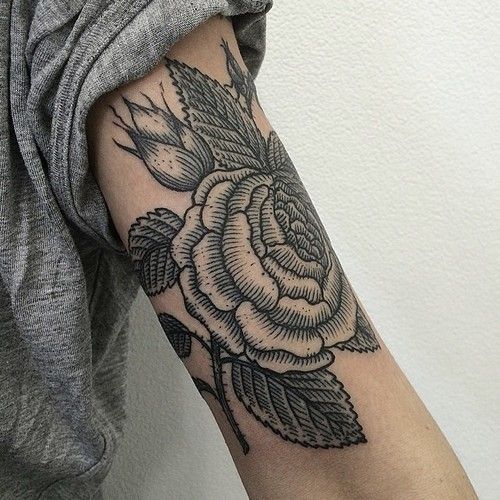
A classic rose tattoo is one of the most common ways artists learn tattoo shading techniques. This design relies on bold outlines combined with layered gradients that create depth inside each petal. The shading transitions from dark edges to softer mid-tones, giving the flower a sculpted, almost three-dimensional appearance.
Traditional tattoo styles like this often rely on controlled whip shading or small circular motions with shading needles. The leaves surrounding the rose also demonstrate strong contrast: darker veins and lighter surfaces help the design pop from the skin. For beginners exploring practice ideas, roses are ideal because their layered petals naturally guide shading placement.
Many artists recommend practicing this structure using practice stencils before tattooing skin. Tattoo educators such as those featured on Tattoo Dojo often use rose designs in their practice worksheet exercises because they help students understand light sources and shadow placement.
Soft Botanical Shading for Elegant Floral Tattoos
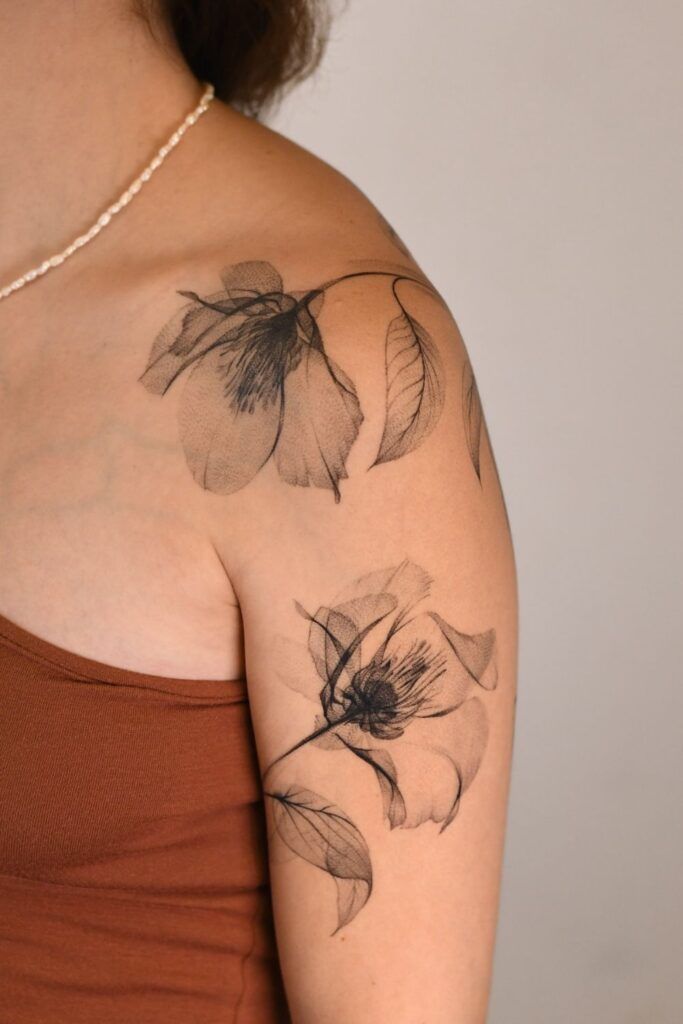
This delicate botanical tattoo demonstrates a completely different shading philosophy. Instead of bold contrast, the artist relies on ultra-soft gradients that create a light, airy effect. The petals appear almost translucent thanks to subtle dotwork and feathered shading techniques.
Fine-line flower designs like this require careful needle control and a lighter hand pressure. The shading often comes from small magnum needles used with very diluted ink. This approach allows artists to build tone gradually, creating a soft aesthetic that works beautifully for shoulder or arm placements.
For tattooists refining their practice ideas, floral tattoos like lily or lotus flower designs are excellent for learning gentle shading transitions. They teach patience and precision—two qualities every artist develops with consistent practice.
Abstract Flow Shading and Smoke Effects
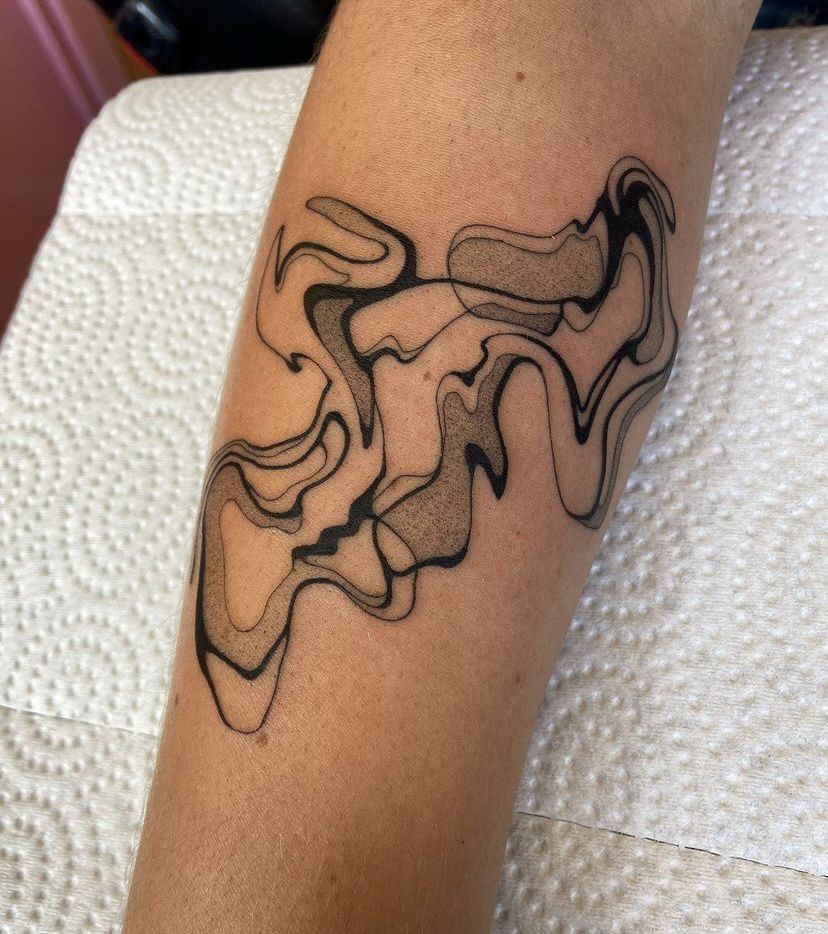
Not all tattoo shading needs to represent real objects. Abstract designs often use flowing shadows and negative space to create movement across the skin. In this tattoo, swirling shapes resemble smoke or liquid ink drifting along the forearm.
The shading here alternates between solid black and soft gradients, forming an organic rhythm across the design. Artists typically achieve this effect using whip shading combined with smooth magnum passes.
This type of tattoo also demonstrates how shading can act as a filler element. Instead of focusing on a single object like a sun, cloud, or butterfly, the shading itself becomes the visual centerpiece.
Artists experimenting with ideas backgrounds simple often start with abstract smoke patterns because they allow freedom to explore texture without strict anatomical rules.
Decorative Floral Flow with Red Accent Shading
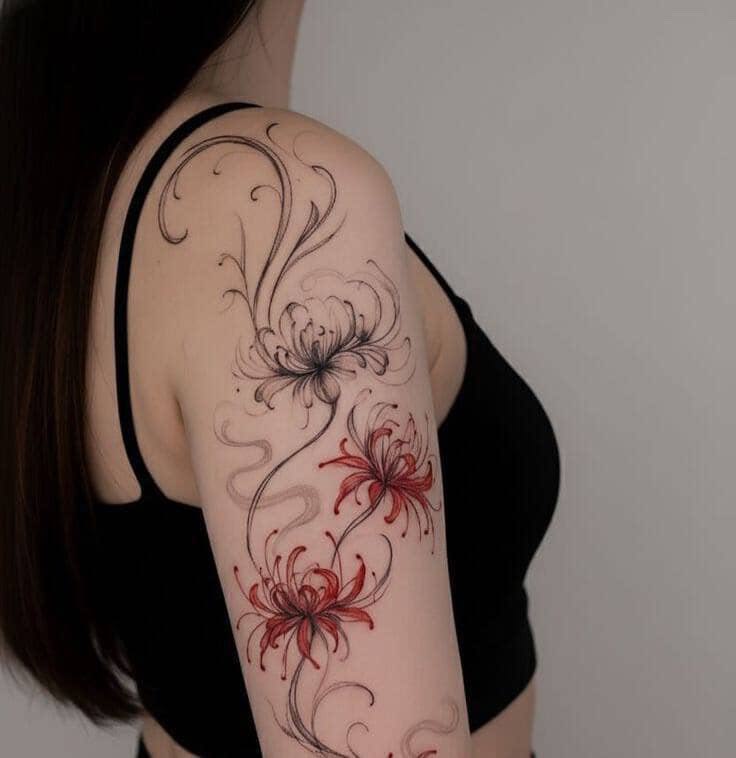
Here the shading works as both structure and decoration. Long, elegant stems flow across the arm while delicate floral shapes—resembling a stylized lily—expand outward. The artist blends fine black shading with touches of red ink to emphasize certain petals.
The grayscale elements rely on thin gradients that stretch along the curves of the stems. These elongated shadows guide the viewer’s eye across the composition.
Many tattoo artists incorporate this technique when designing background filler around existing tattoos. It’s a creative way to connect multiple pieces while maintaining a cohesive style.
When practicing this style, tattoo apprentices often sketch floral patterns over practice worksheets and experiment with soft shading before attempting color accents.
Minimalist Floral Shading with Graphic Flow
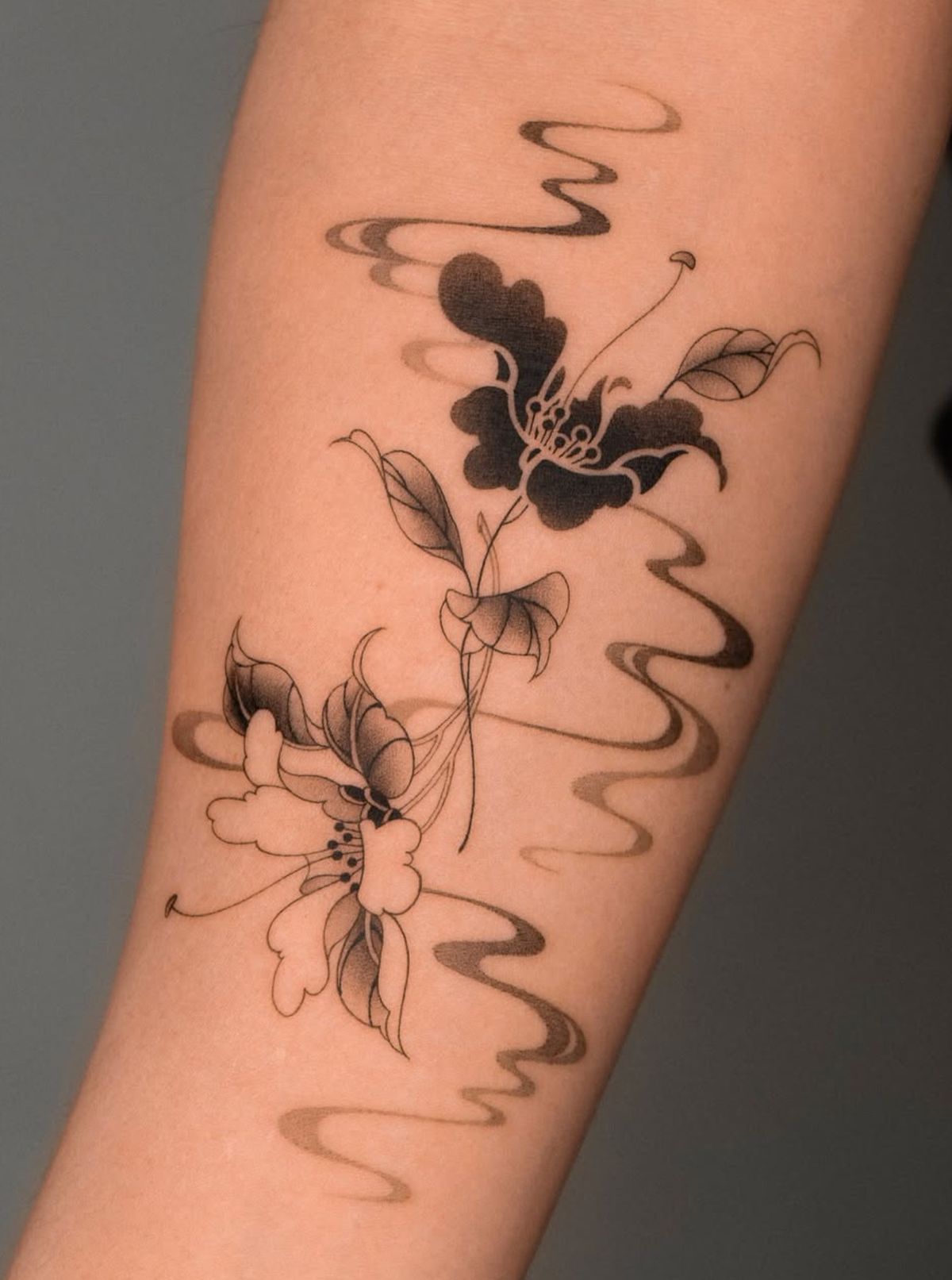
This tattoo balances minimalism with expressive shading. The floral elements are rendered with gentle tonal shading while the surrounding wave-like forms add a graphic element to the design.
The smoky shapes demonstrate how shading can be used to frame a flower rather than simply fill it. By controlling the contrast levels, the artist creates depth without overwhelming the central motif.
Tattoo educators frequently encourage beginners to study tattoos like this because they highlight the importance of spacing. Good shading is not only about where ink is placed—but also where it isn’t.
Practicing negative space and light gradients is a key part of developing advanced shading techniques.
Realistic Butterfly Shading with Soft Texture
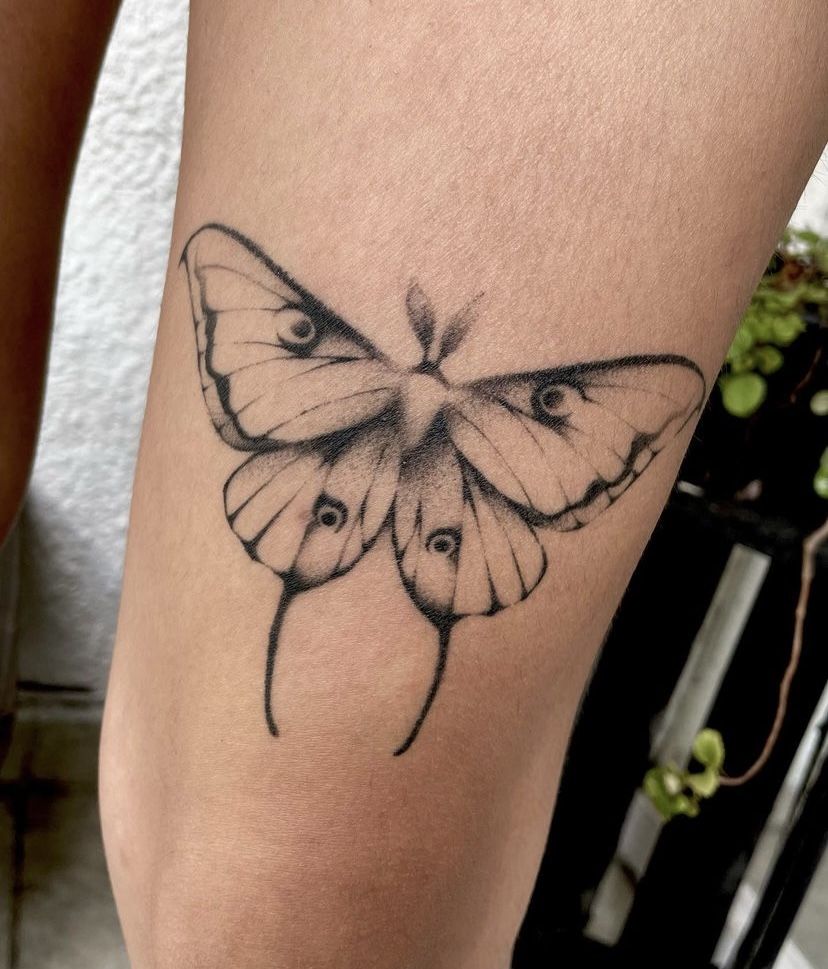
A butterfly tattoo offers a perfect opportunity to demonstrate realistic shading. The wings here feature subtle tonal shifts that mimic the delicate texture of an actual moth or butterfly wing.
Tiny gradients near the edges give the wings a slightly translucent effect. The center body is shaded darker, grounding the design and creating balance.
This style requires patience and smooth hand movement. Artists often practice butterfly tattoos while studying reference photos to understand natural light distribution.
For beginners building a portfolio of practice ideas, butterfly designs help develop confidence with symmetry and shading consistency across mirrored shapes.
Surreal Smoke Portrait with Atmospheric Shading
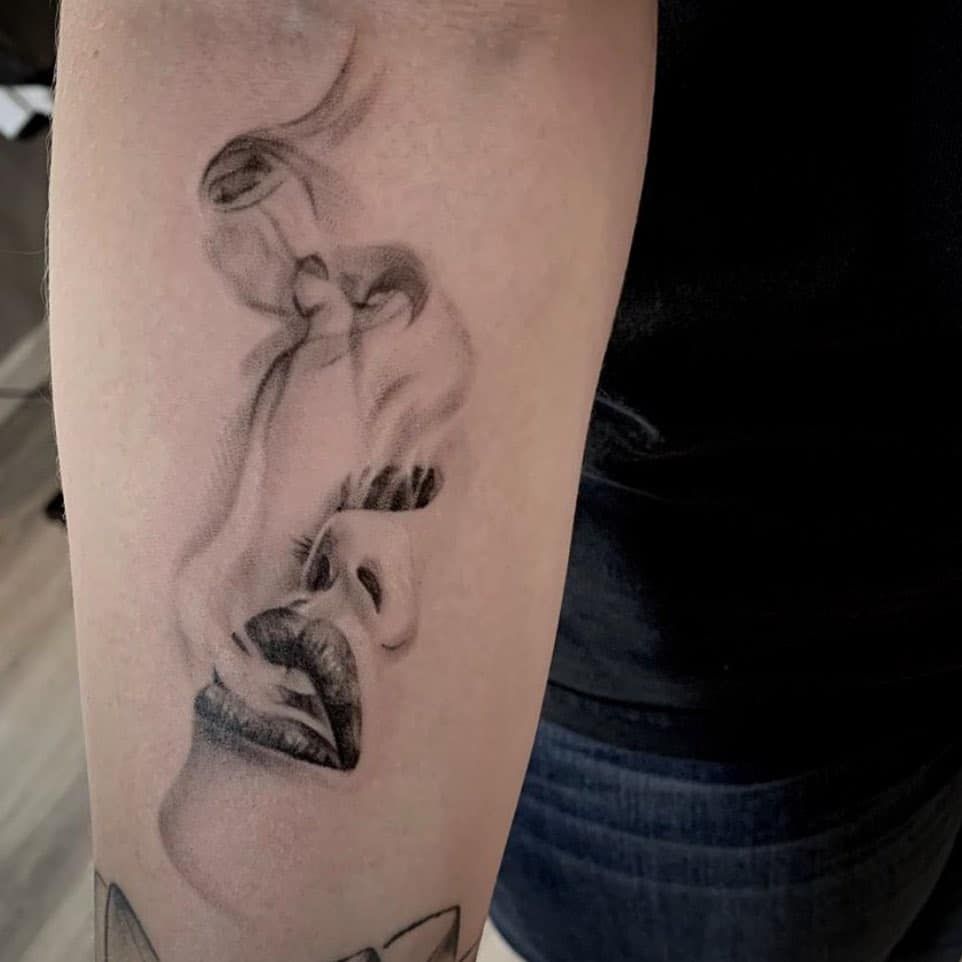
Portrait tattoos often push shading techniques to the highest level. In this piece, the design blends a female face with flowing smoke shapes that gradually dissolve into the skin.
The shading transitions are extremely soft, creating an atmospheric effect. Instead of hard lines, the portrait emerges through layered shadows.
Artists typically achieve this using diluted ink and multiple passes with magnum needles. The result is almost photographic in its depth.
Tattoo artists who specialize in realism often study portrait drawing extensively before tattooing. Many also recommend practicing on practice worksheets to master smooth gradients.
This style demonstrates how shading alone can shape emotion within a tattoo design.
Soft Magnolia Flower Shading with Dotwork Texture
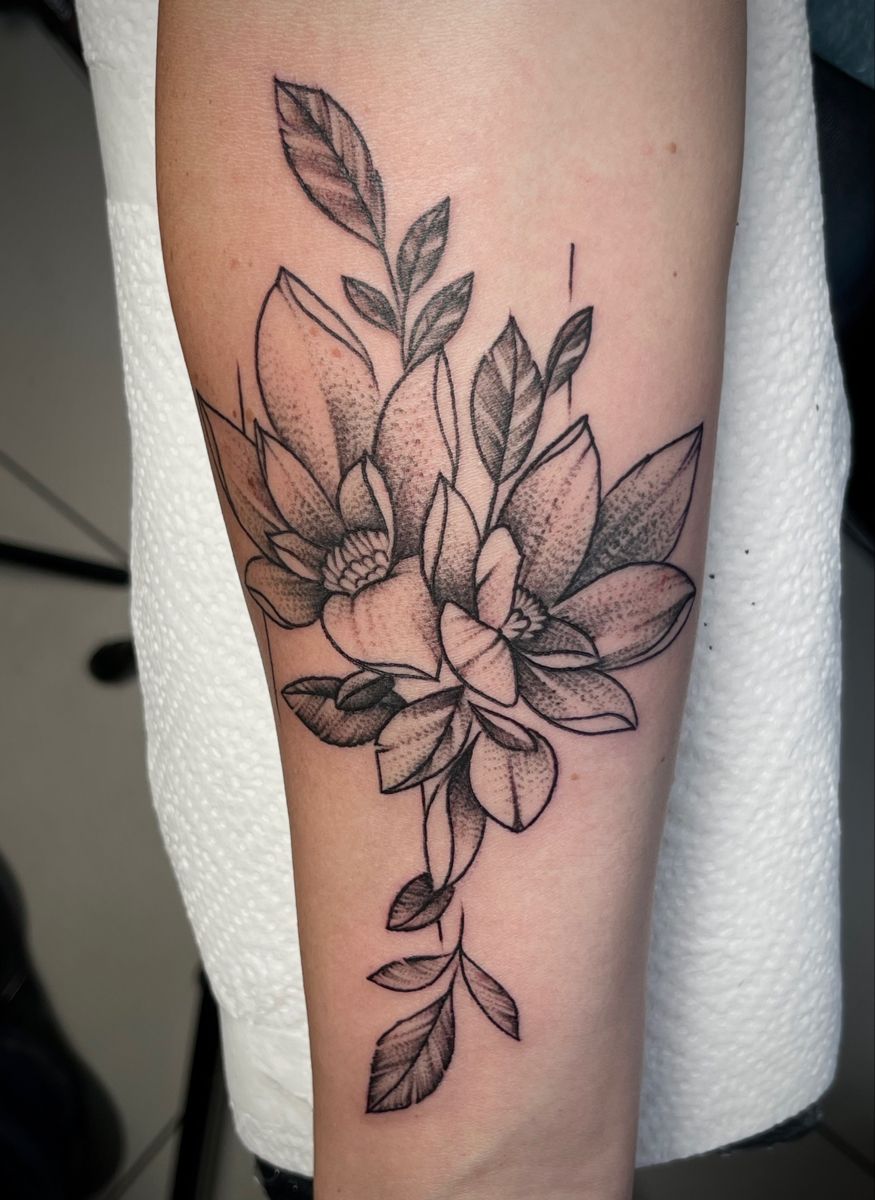
This elegant botanical tattoo showcases refined shading built through a combination of smooth gradients and subtle dotwork. The layered flower petals resemble magnolia blossoms, with carefully placed shadows that create depth without overwhelming the delicate linework.
The shading is concentrated at the base of each petal, fading gradually toward the edges to simulate natural light. Tiny dot patterns add texture and help soften transitions between tones. This is a technique many artists explore while developing their practice ideas, because dot shading trains patience and control.
Leaves surrounding the flowers feature darker tones that frame the lighter petals, helping the composition feel balanced. For apprentices learning shading techniques, floral designs like this often appear on practice worksheets because they clearly demonstrate how shadows define structure.
Realistic Rose and Butterfly Shading
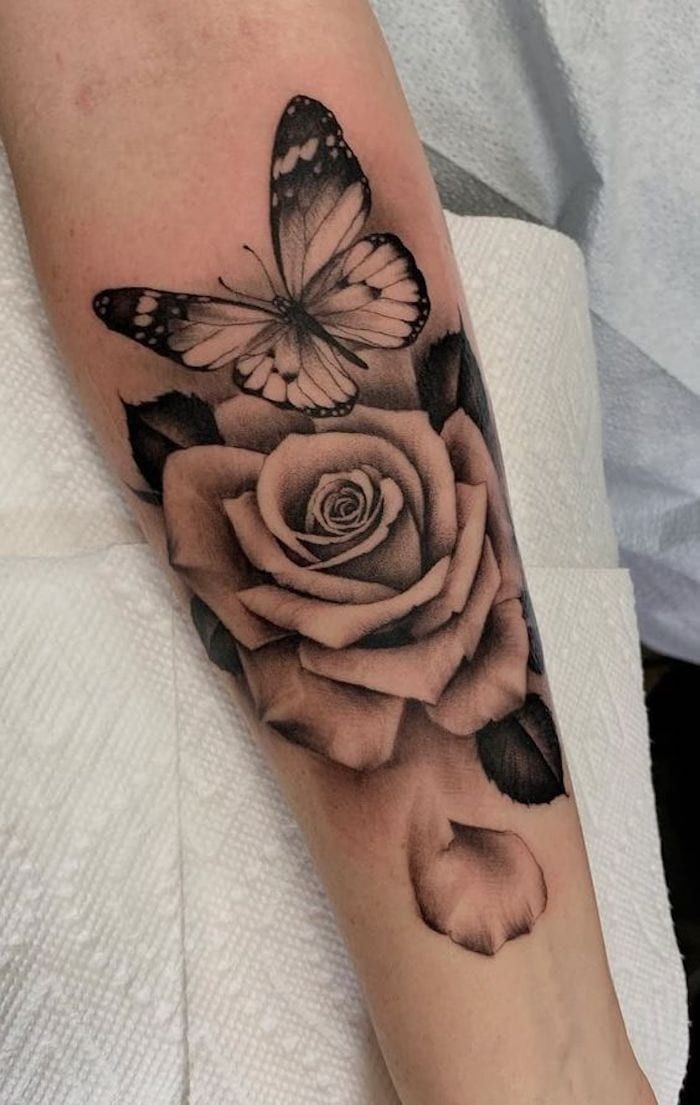
A rose paired with a butterfly is one of the most iconic combinations in tattoo art. This design leans heavily on realism, achieved through smooth gradient shading and strong contrast.
The petals of the rose feature layered tonal shifts that mimic natural curvature. Dark shadows are tucked deep between the folds of the petals, while the outer surfaces remain lighter, giving the flower a sculpted appearance.
Above the rose, the butterfly wings use softer gradients and fine shading to capture the delicate texture of real wings. Achieving this effect requires careful control of shading needles, often using magnum configurations to blend tones seamlessly.
Many artists practice this style using detailed stencil outlines before tattooing, because realistic shading leaves little room for error.
Fine-Line Floral Composition with Soft Gradients
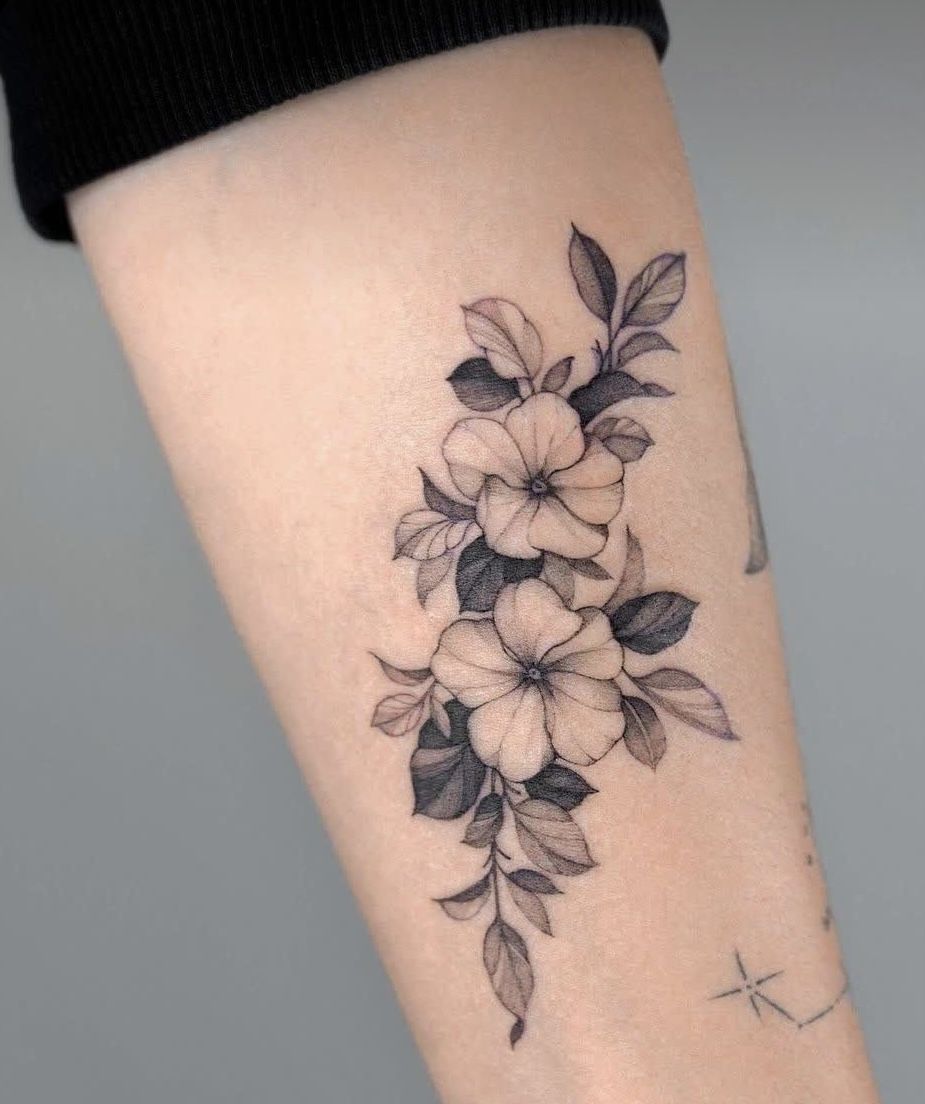
This composition demonstrates how minimal linework and controlled shading can create a graceful floral tattoo. Several blossoms are arranged vertically, with leaves extending outward to create a natural flow.
Instead of strong contrast, the artist relies on light tonal shading that gently shapes each petal. The result feels airy and refined. This style is increasingly popular among modern tattoo styles, particularly within fine-line tattooing.
For artists exploring new practice ideas, this type of design helps develop consistency. Each petal requires balanced shading so that no element dominates the composition.
Many tattoo schools recommend floral arrangements like this for beginners because they allow artists to practice subtle gradients repeatedly across multiple petals and leaves.
Traditional Rose Shading with Bold Texture
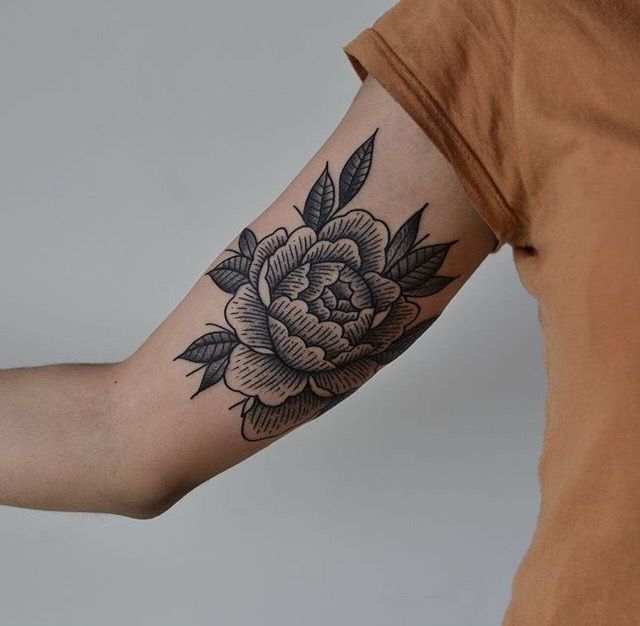
Unlike softer floral tattoos, this rose design demonstrates a more graphic shading style often seen in traditional or neo-traditional tattooing.
Here, the artist uses bold linework combined with structured shading lines inside the petals. Instead of smooth gradients, small repeating strokes create texture and shadow.
This technique helps the design maintain strong visibility even from a distance. It’s a method many artists practice when learning foundational shading skills because it trains hand stability and rhythm.
When exploring types of shading techniques, artists often experiment with these line-based shadows before transitioning into softer gradient shading.
Dotwork Heart Shading Technique
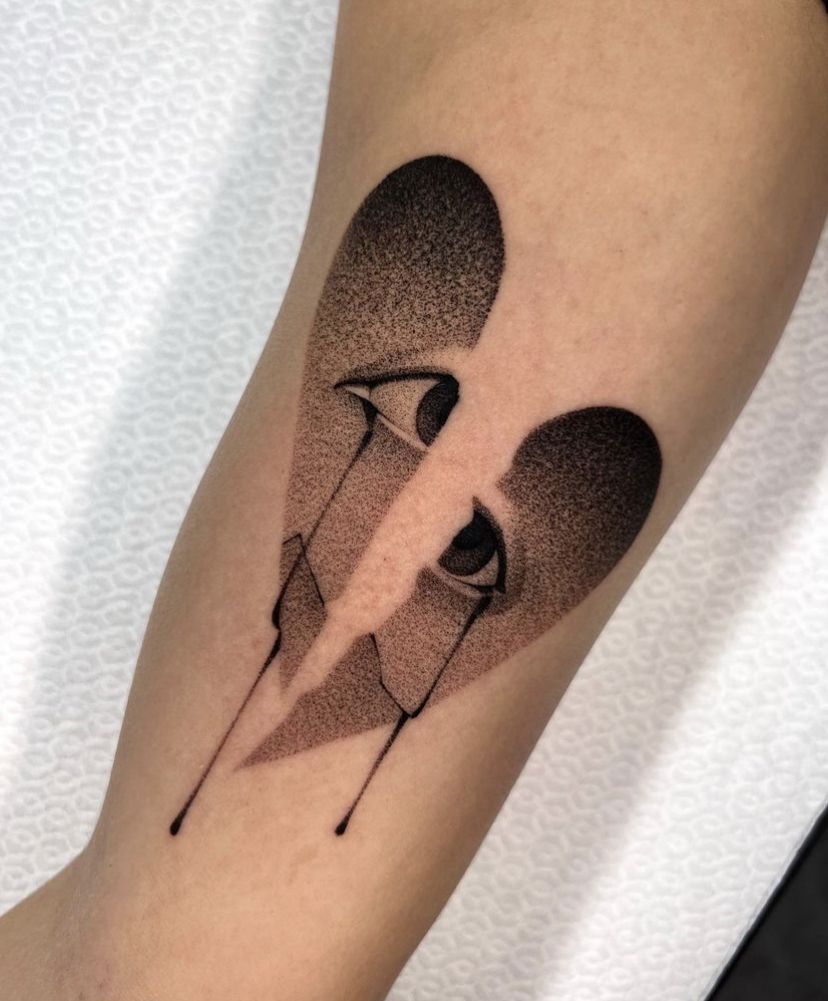
This striking tattoo uses dotwork shading to create two overlapping heart shapes. Thousands of tiny dots build the gradient from dark to light, producing a velvety texture across the design.
Dot shading is one of the most demanding techniques in tattooing. It requires patience and precise needle control, as the artist must maintain consistent spacing and density.
The dramatic gradient effect gives the tattoo a graphic, almost sculptural appearance. Many artists practice dotwork on practice worksheets or synthetic skin before applying it to real tattoos.
Dotwork also works well for ideas backgrounds, where artists want to add shadow without heavy solid ink.
Minimal Cloud Shading
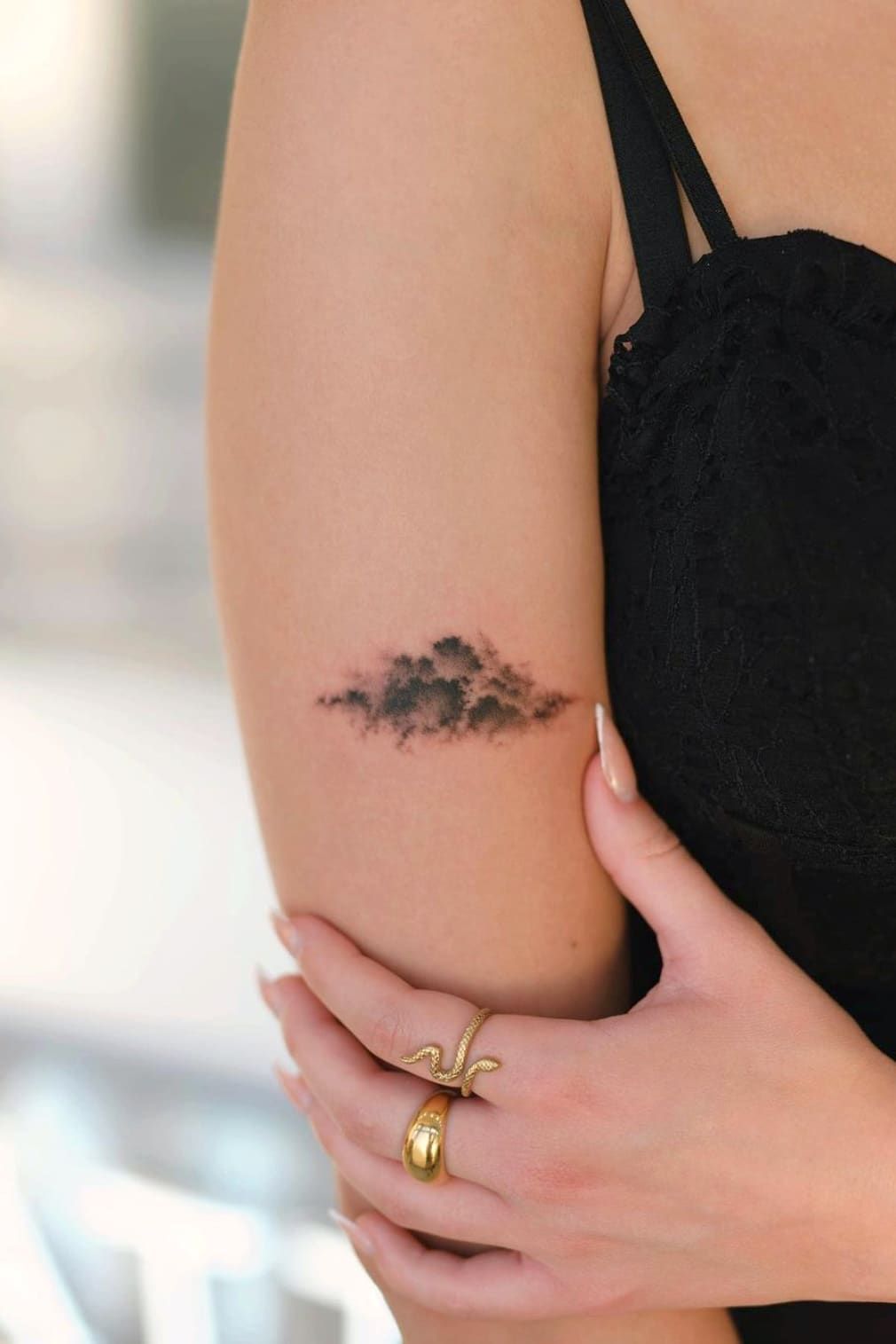
This small tattoo demonstrates how subtle shading can create atmosphere even in minimal designs. The soft shapes resemble a drifting cloud, built with diffused shadow rather than sharp lines.
The edges appear slightly blurred, achieved through gentle whip shading and diluted ink. This creates a soft background effect that feels almost painterly.
Designs like this are often used as filler elements in larger tattoo compositions. Artists may place small cloud shapes around larger pieces such as a sun, butterfly, or floral designs to connect separate tattoos into one flowing sleeve.
Because the shading is light and organic, many artists recommend cloud designs as beginner-friendly practice ideas.
Complex Butterfly and Lily Sleeve Shading
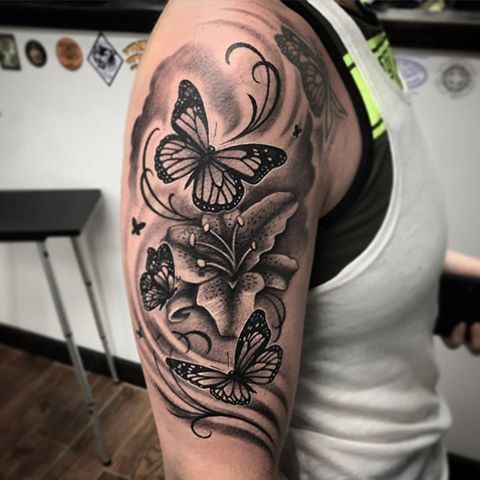
This large sleeve tattoo combines several shading approaches within a single composition. Multiple butterfly designs float around a large lily, surrounded by swirling shadows and decorative filler elements.
The lily petals feature layered shading that gives them a realistic softness. Meanwhile, the butterflies use fine gradients and small highlights to suggest delicate wing structures.
The background shading helps unify the entire composition, guiding the viewer’s eye across the arm. This technique is common in large tattoos where artists need visual flow between different elements.
Designs like this showcase how advanced tattoo shading can combine multiple styles, including realism, soft gradients, and decorative filler shading.
Flowing Blackwork Fish with Soft Gradient Shading
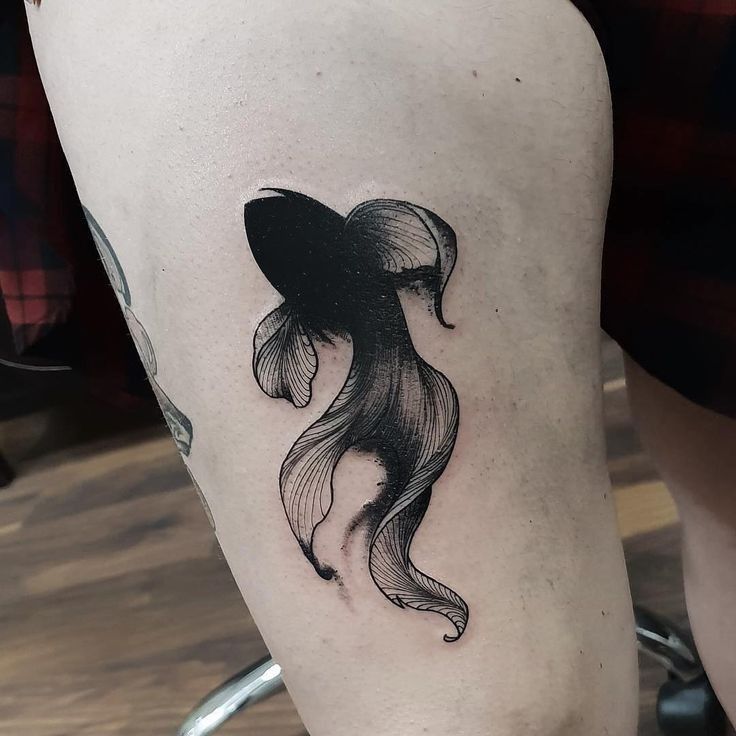
This elegant fish tattoo combines bold blackwork with fluid shading techniques. The body of the fish is heavily saturated with dark ink, creating strong contrast against the surrounding skin. Meanwhile, the flowing fins are rendered with fine linework and soft shading gradients that gradually fade outward.
The artist uses curved strokes to follow the natural movement of the fins, giving the design a sense of motion. Subtle tonal transitions along the body add depth without overwhelming the minimalist composition.
Designs like this are excellent practice ideas for artists learning how to balance solid black areas with soft shading. They also demonstrate how shading can mimic movement in water, almost like a drifting cloud of ink.
Realistic Lion Portrait with Dramatic Shading

Realism is one of the most demanding tattoo styles, and this lion portrait shows how powerful shading techniques can be. The lion’s face is built almost entirely through layered shadows and highlights rather than heavy outlines.
Fine shading creates the illusion of individual strands of fur, while darker gradients shape the cheekbones and jawline. The eye, highlighted with a striking blue tone, becomes the focal point because of the surrounding shadow work.
Achieving this level of detail requires expert control of shading needles, typically magnum needles that allow smooth blending. Many tattoo artists spend years practicing animal portraits on practice worksheets before attempting a full realism piece like this.
Warrior Portrait with Leopard Headdress
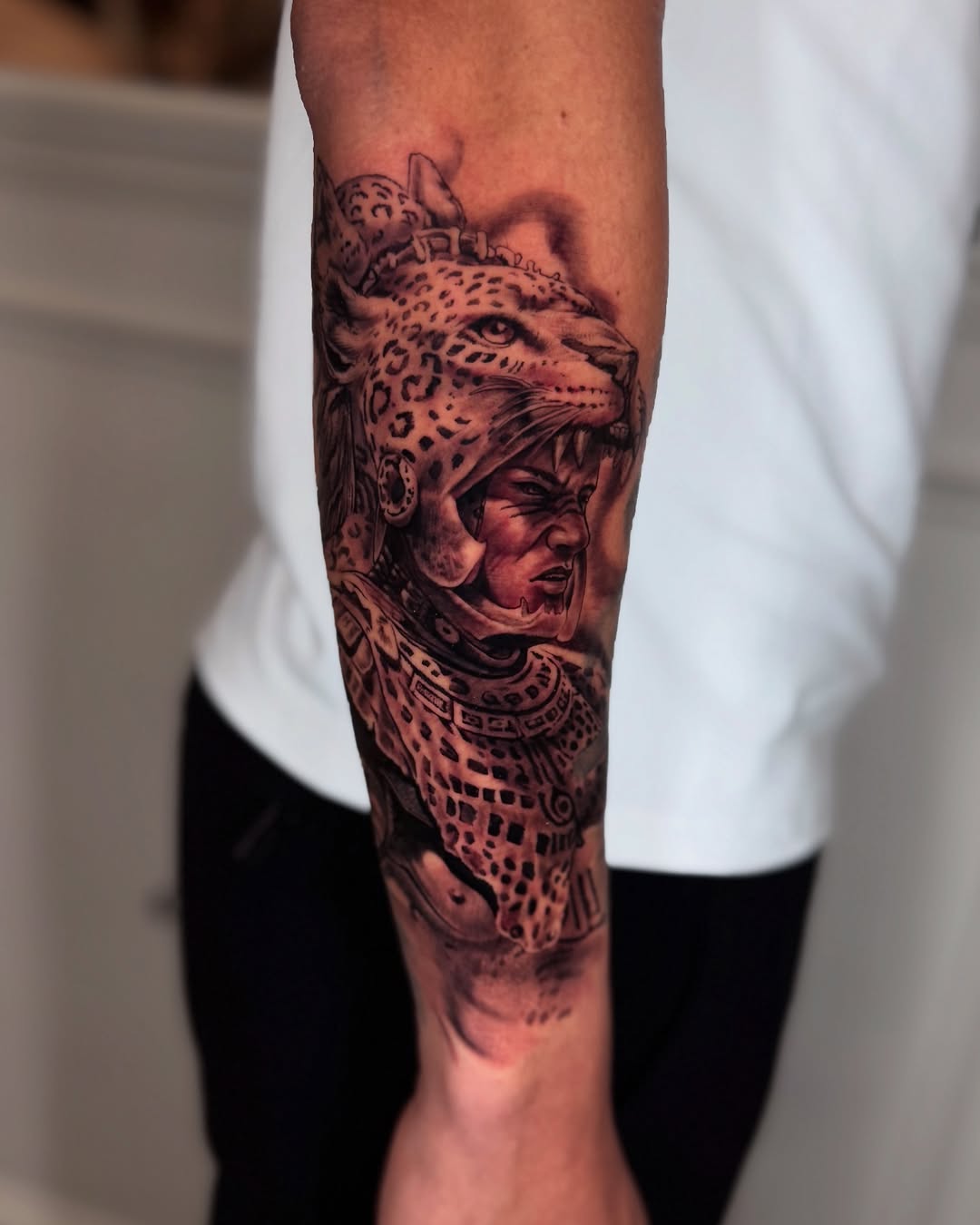
This powerful tattoo blends portrait realism with symbolic imagery. The warrior’s face sits beneath the open jaws of a leopard headdress, creating a dramatic layered composition.
The shading in this design builds depth in several ways. Dark tones inside the leopard’s mouth create a shadowed frame around the warrior’s expression. Meanwhile, subtle gradients define the contours of the warrior’s face and skin texture.
This style demonstrates how shading can guide storytelling inside a tattoo. Each tonal layer leads the viewer’s eye through the composition. Complex portrait tattoos like this often require precise stencil placement and careful planning before shading even begins.
Portrait of Christ with Crown of Thorns
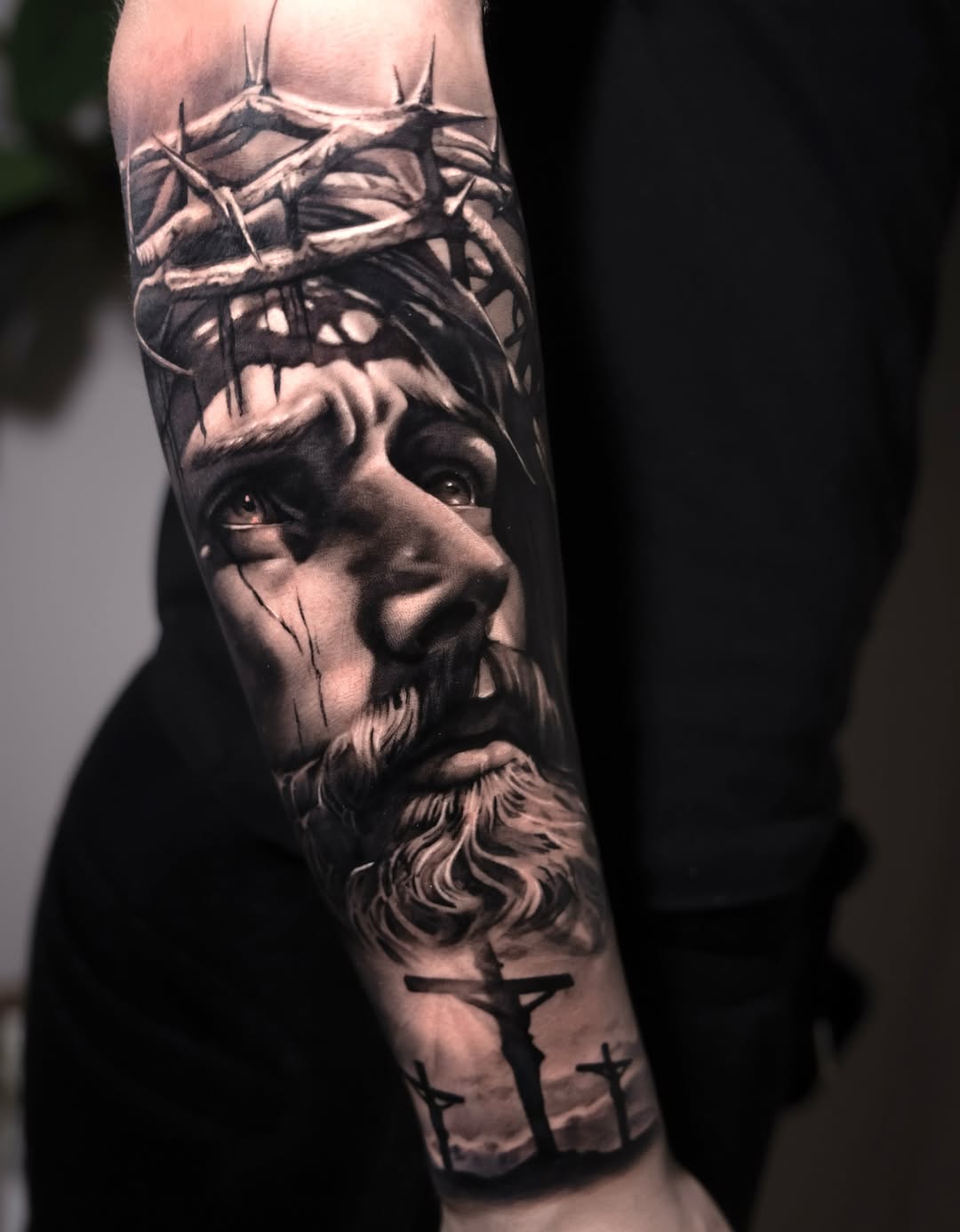
Religious tattoo designs often rely heavily on shading to create emotional intensity. In this portrait of Christ, dramatic lighting is achieved through strong contrasts between deep shadows and bright highlights.
The crown of thorns uses dense shading to form sharp silhouettes, while softer gradients shape the contours of the face and beard. Small shadow lines around the eyes and cheekbones create a sense of expression and depth.
Many realism artists use diluted ink and multiple shading passes to achieve this effect. These layered gradients allow the artist to slowly build the final image, similar to classical charcoal drawing techniques.
Fine-Line Butterfly with Smooth Shading
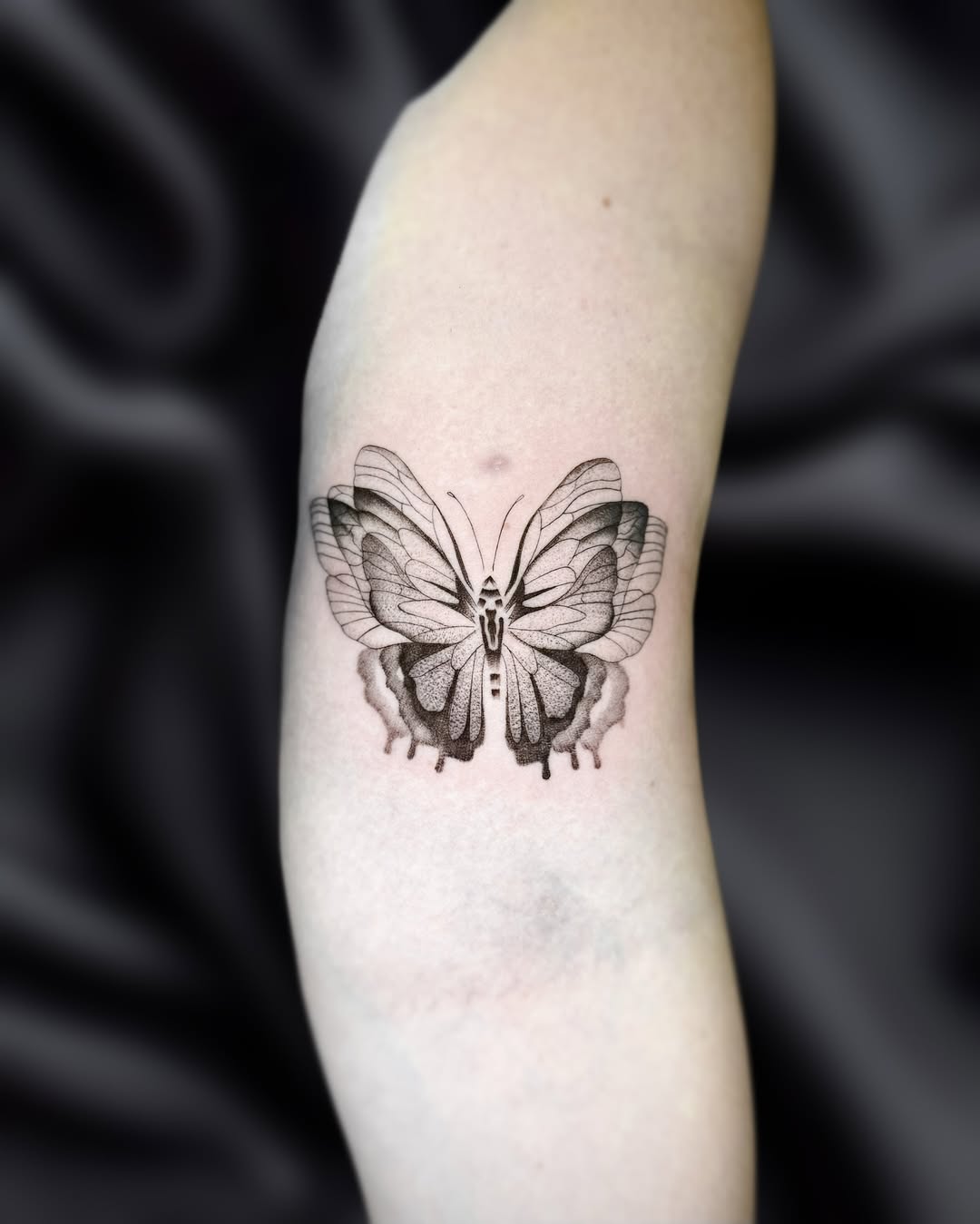
A butterfly tattoo offers an ideal example of symmetrical shading. Each wing mirrors the other, making balance and precision essential.
The shading here is soft and carefully blended, with darker tones near the center of the wings fading toward the edges. Fine linework defines the wing patterns while subtle gradients give the butterfly a light, natural texture.
Butterfly designs are commonly used in tattoo practice ideas because they teach symmetry and shading consistency. Artists often begin with butterfly practice stencils to learn how shading behaves across mirrored shapes.
Japanese-Inspired Samurai Scene
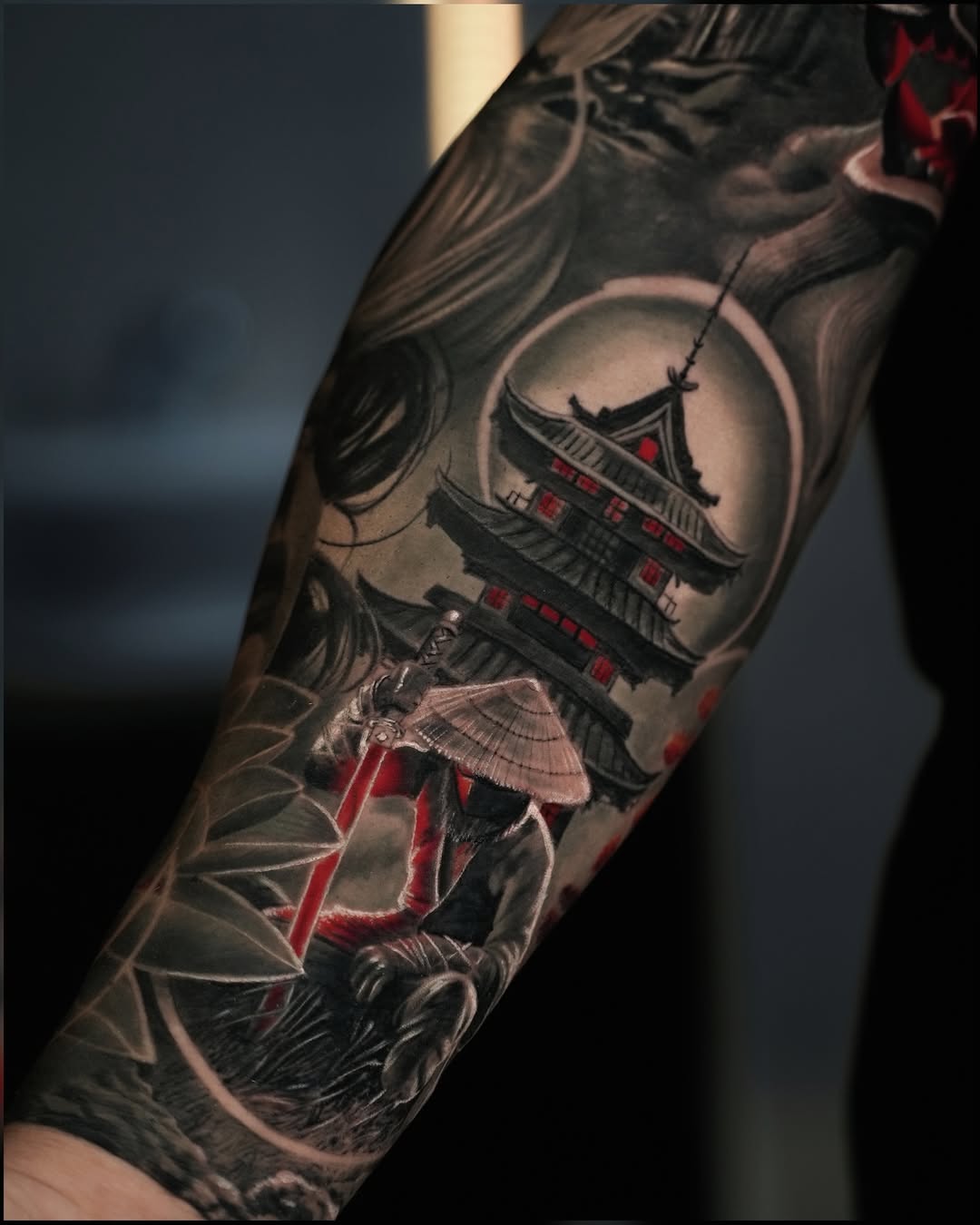
This dramatic tattoo blends several visual elements into one cohesive scene. A traditional Japanese pagoda rises in the background while a samurai figure sits beneath it, surrounded by atmospheric shading.
The background gradients resemble fog or cloud textures, giving the tattoo a cinematic quality. Red accents highlight key elements of the architecture and clothing, creating contrast against the predominantly black and grey palette.
Large compositions like this require advanced planning because shading must unify multiple components. Artists often build the darkest shadows first and gradually layer lighter gradients to create depth.
Floral Sleeve Composition with Layered Shading
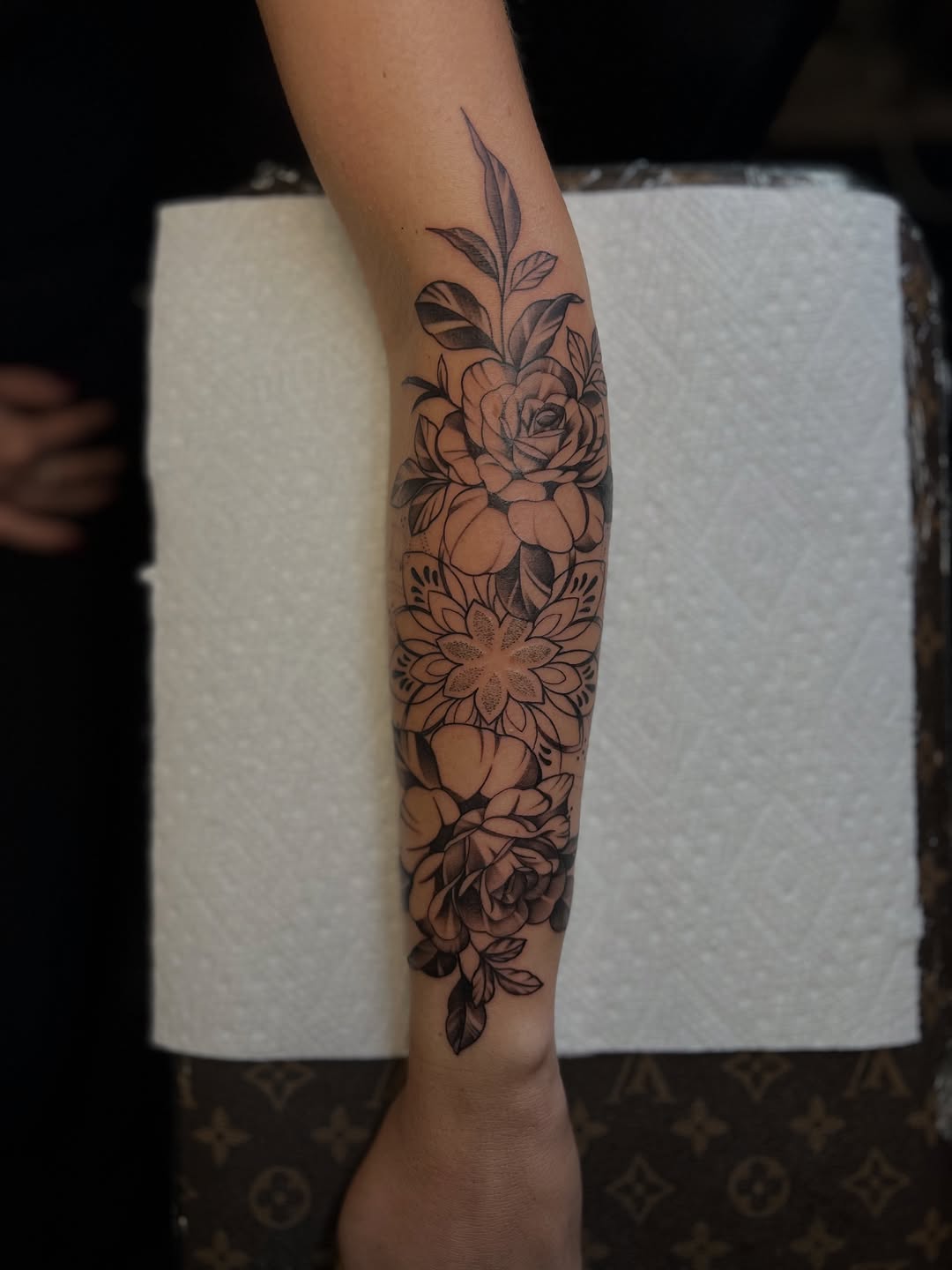
This floral sleeve brings together multiple botanical elements into a flowing forearm composition. Large rose shapes anchor the design, while additional flower patterns and leaves fill the surrounding space.
The shading is structured to create visual hierarchy. Darker shadows sit beneath the petals and leaves, while lighter gradients keep the flowers looking soft and dimensional.
This type of tattoo is a perfect example of how shading can function as filler between larger design elements. Subtle shadows connect each flower into a cohesive sleeve rather than a collection of separate tattoos.
Many artists practice floral sleeves using practice worksheets because repeating petals and leaves offer excellent opportunities to refine shading techniques.
Dark Realism Portrait With Rosary Tattoo
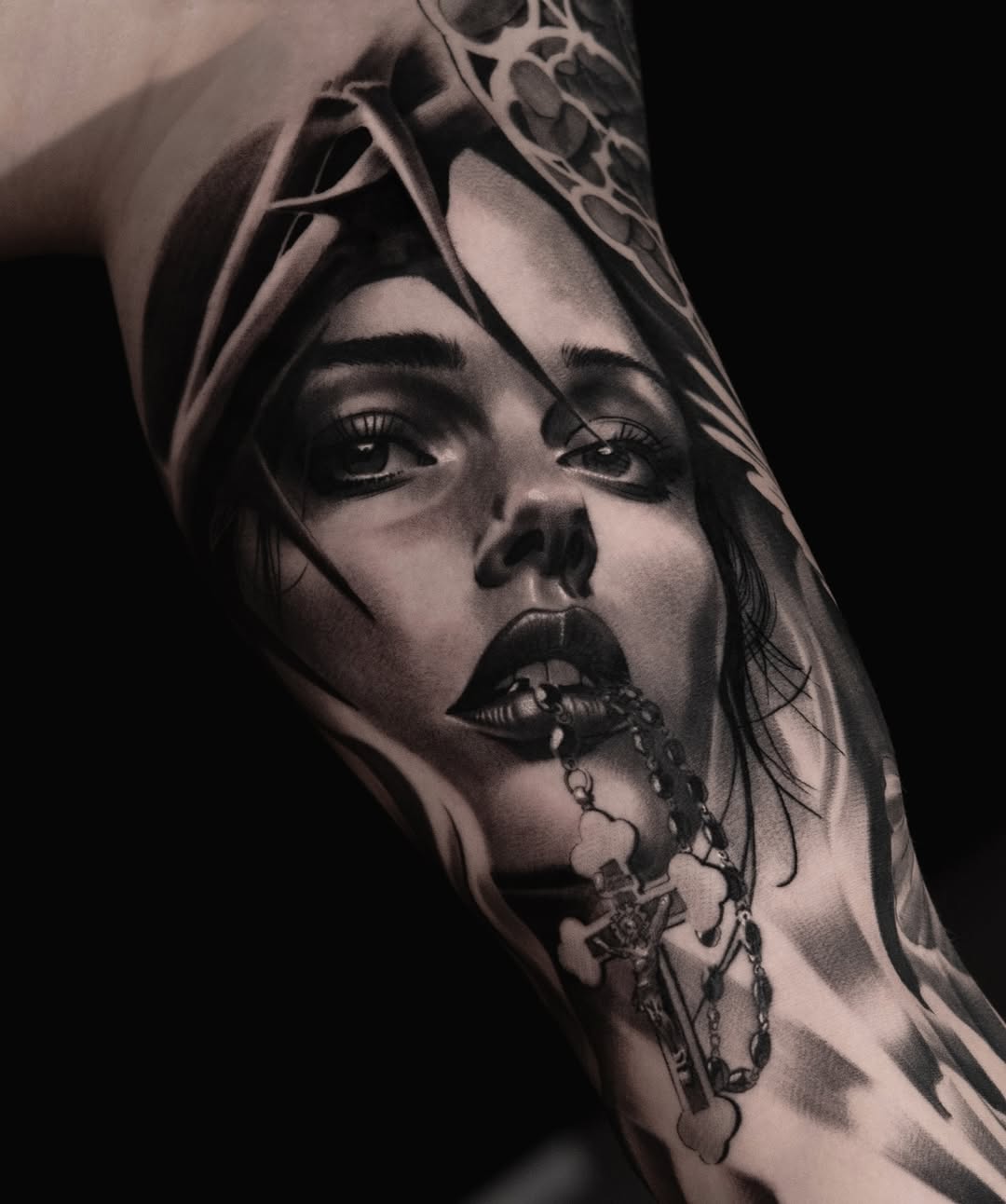
This powerful black and gray realism tattoo features a striking portrait of a woman whose gaze immediately draws attention. The artist captured the eyes with impressive depth and realism, using smooth shading and soft gradients to create lifelike skin tones and dramatic shadows. A rosary chain hangs delicately from her lips, ending with a detailed crucifix that adds a symbolic religious element to the piece.
The composition flows beautifully along the arm, making the portrait feel integrated with the body’s natural shape. Fine highlights on the nose, lips, and eyelids give the tattoo a three-dimensional quality, while the darker tones surrounding the face add contrast and drama. This style is often associated with realism sleeve tattoo design, where emotional imagery and symbolism come together to create a bold and unforgettable piece.
Bold Floral Blackwork Forearm Tattoo
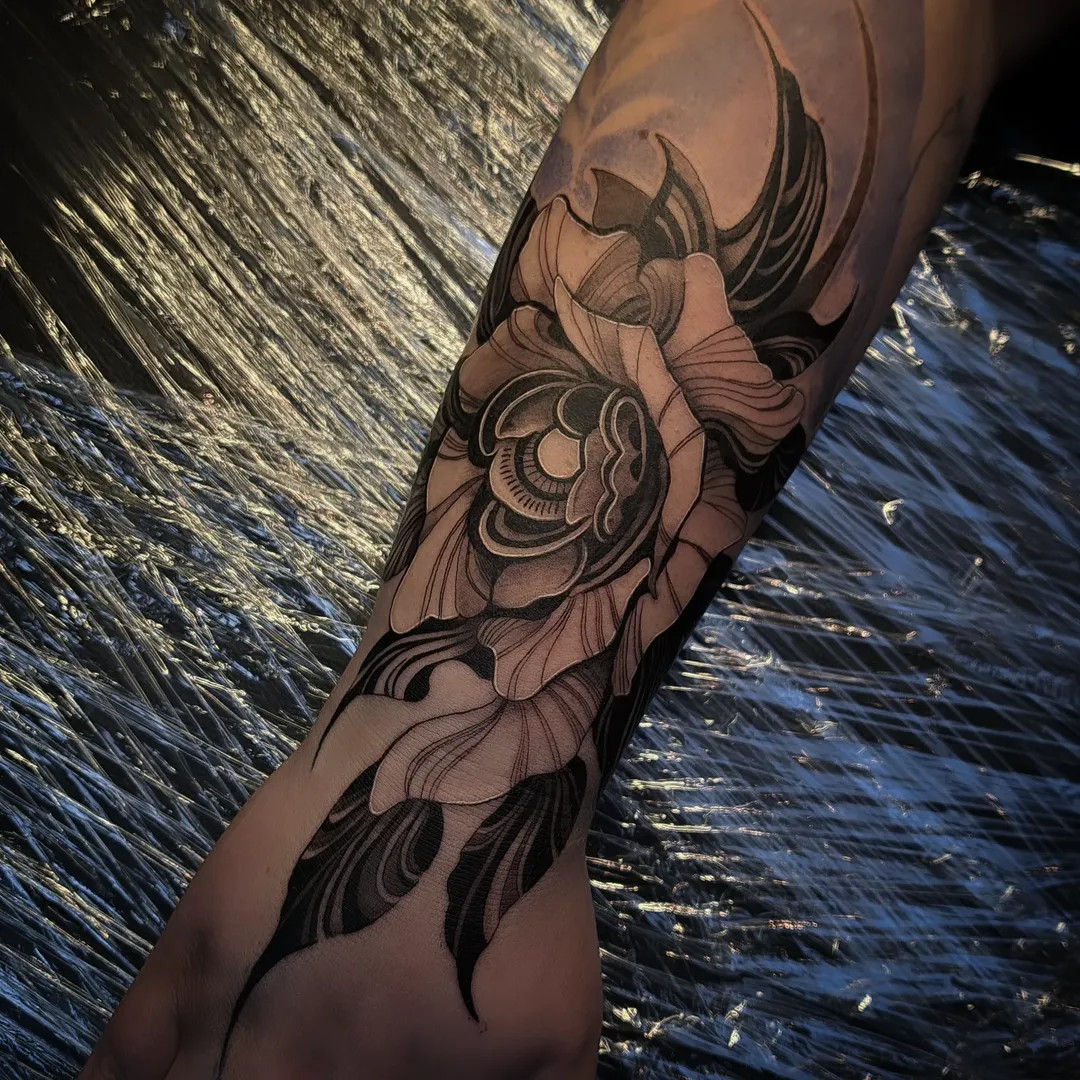
This tattoo showcases a striking floral design executed in a modern blackwork style. The large bloom dominates the forearm with strong outlines and deep shading that give the petals a sculpted appearance. The artist used layered black ink and negative space to create depth, allowing the flower to appear both graphic and dimensional at the same time.
The flowing shapes around the flower extend naturally down the arm, giving the tattoo a sense of movement. This type of floral forearm tattoo design is popular for people who want a bold yet elegant piece that blends traditional botanical themes with contemporary tattoo techniques. The contrast between dark shading and lighter skin tones makes the flower stand out beautifully.
Minimalist Flowing Botanical Line Tattoo
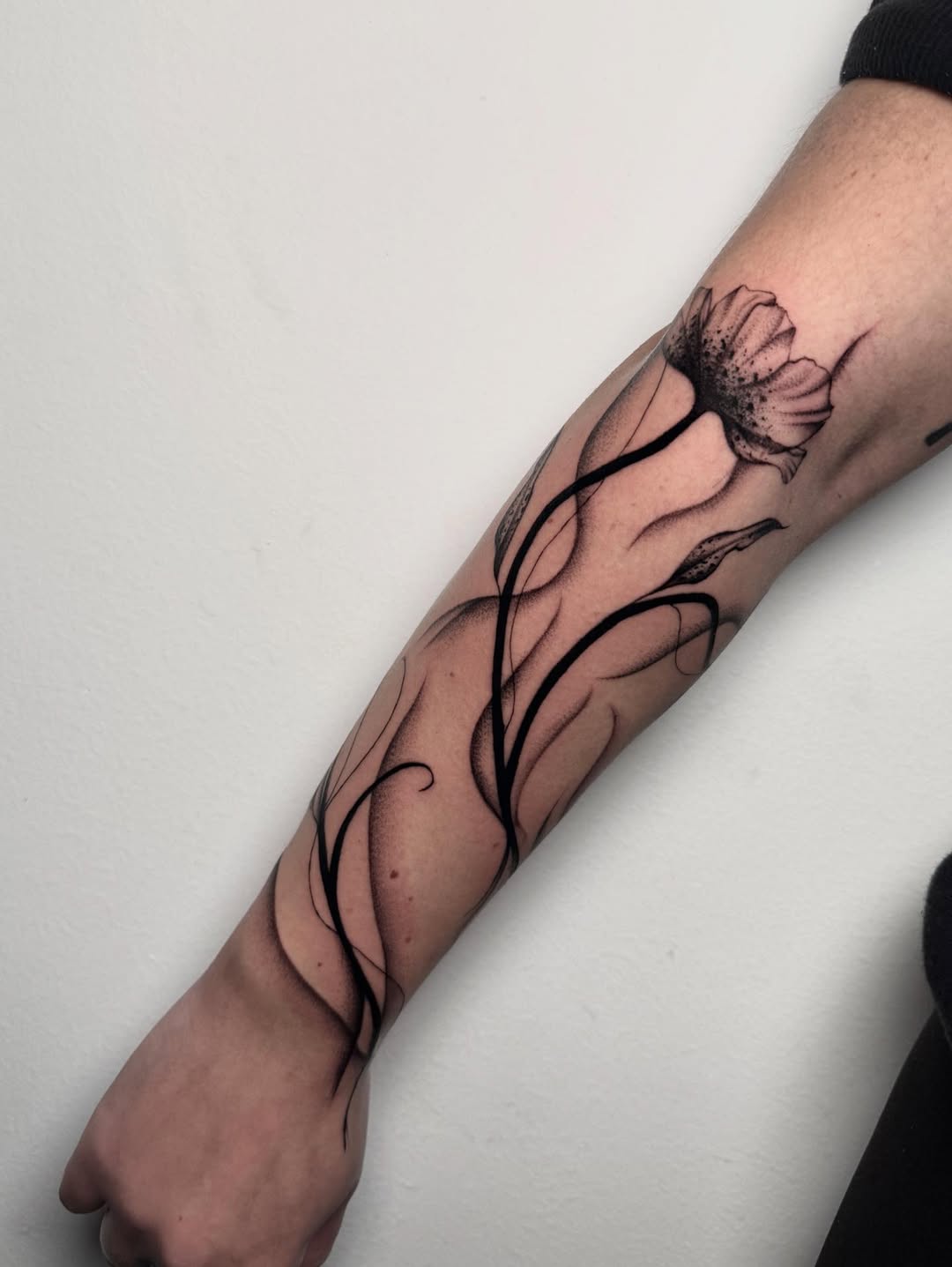
This elegant forearm tattoo uses thin lines and soft shading to create a delicate botanical composition. The design features a single flower with long, flowing stems that curve down the arm in an almost calligraphic pattern. The artist used fine line work and subtle dot shading to give the petals gentle texture without overwhelming the minimal aesthetic.
What makes this tattoo unique is its sense of movement. The slender lines stretch gracefully across the forearm, almost like ink flowing across the skin. This type of fine line floral tattoo is perfect for those who prefer subtle body art that feels artistic and lightweight rather than bold and heavy.
Butterfly and Flower Forearm Tattoo
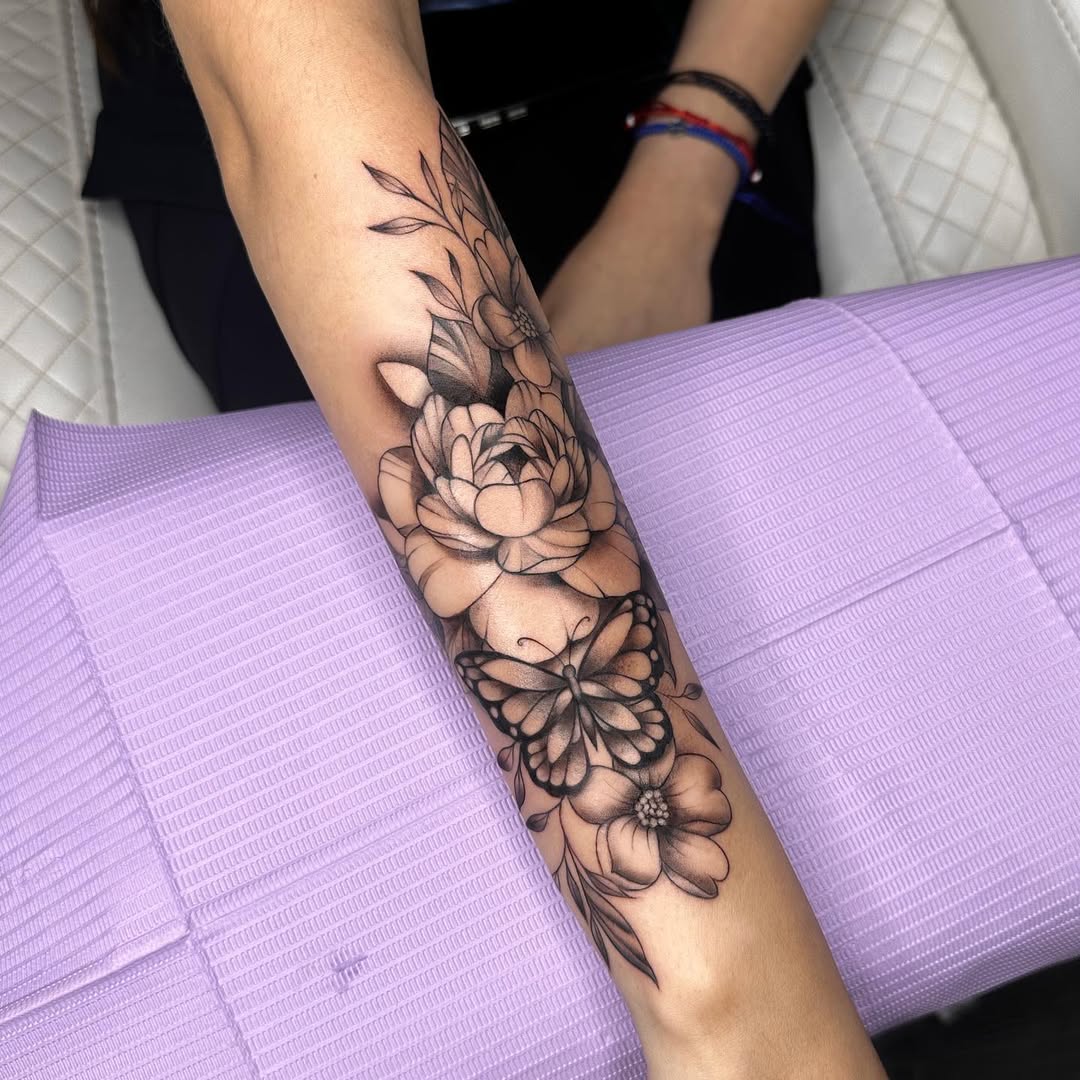
This forearm tattoo combines floral elements with a beautifully detailed butterfly, creating a design full of life and symbolism. The butterfly sits at the center of the composition with wings carefully shaded to emphasize their natural texture. Surrounding flowers add softness and balance to the overall piece.
The black and gray shading gives the design depth while maintaining a soft, feminine look. Butterflies often symbolize transformation and freedom, making this tattoo both visually appealing and meaningful. The arrangement of flowers and wings follows the natural curve of the arm, creating a harmonious composition that feels organic and balanced.
Decorative Butterfly and Rose Shoulder Tattoo
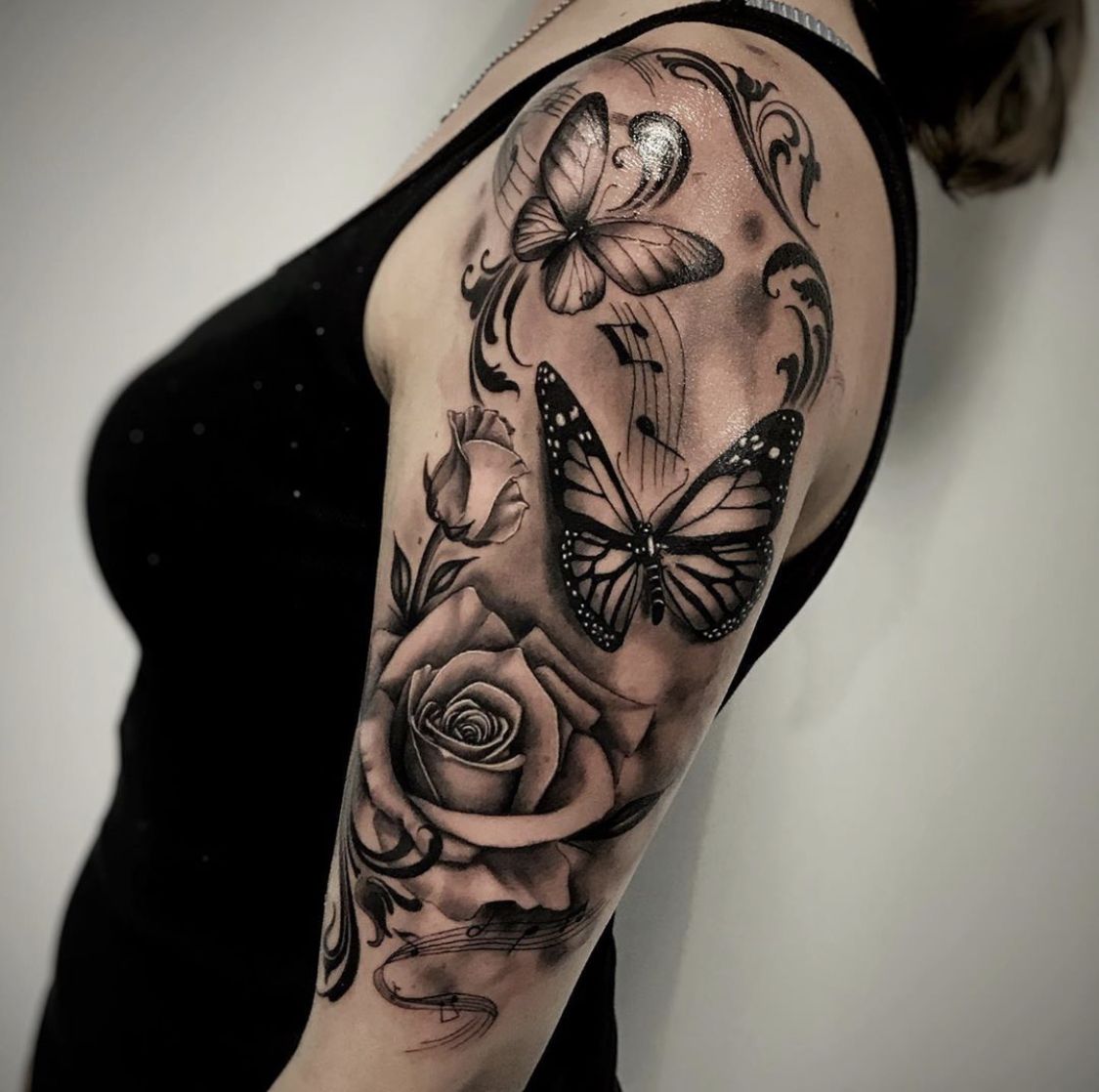
This shoulder tattoo blends ornamental design with classic floral imagery. Two butterflies float above a large rose, while elegant decorative swirls and musical notes add a unique artistic twist. The shading is smooth and carefully blended, giving the petals and wings a soft, almost velvety appearance.
The placement on the shoulder allows the design to expand outward, creating a flowing composition that works beautifully with the body’s contours. Roses symbolize beauty and passion, while butterflies represent change and renewal. Together they create a tattoo that feels both romantic and expressive.
Elegant Floral Shoulder and Chest Tattoo
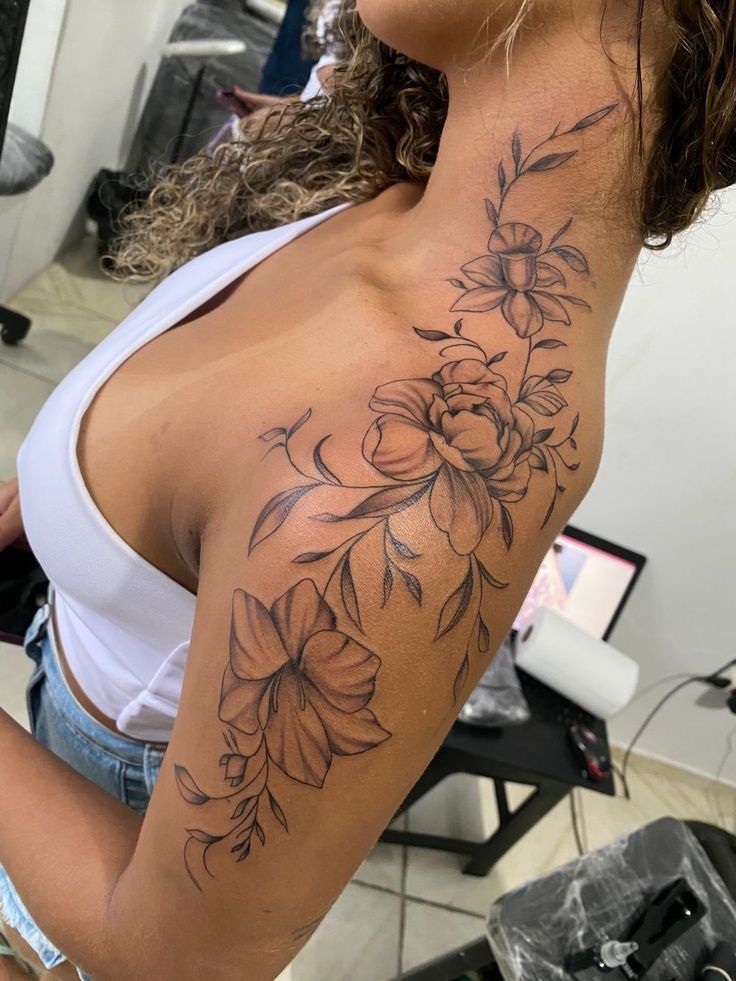
This large floral tattoo extends gracefully from the shoulder down toward the chest. The design features several blooming flowers connected by delicate leaves and stems, forming a flowing botanical arrangement. The artist used fine lines and soft shading to create subtle depth without making the piece too heavy.
The placement makes the tattoo look almost like natural decoration across the skin. It follows the curve of the shoulder and collarbone, enhancing the body’s shape while maintaining an elegant, feminine appearance. Floral tattoos in this style are often chosen for their timeless beauty and soft visual impact.
Realistic Black and Gray Rose Tattoo
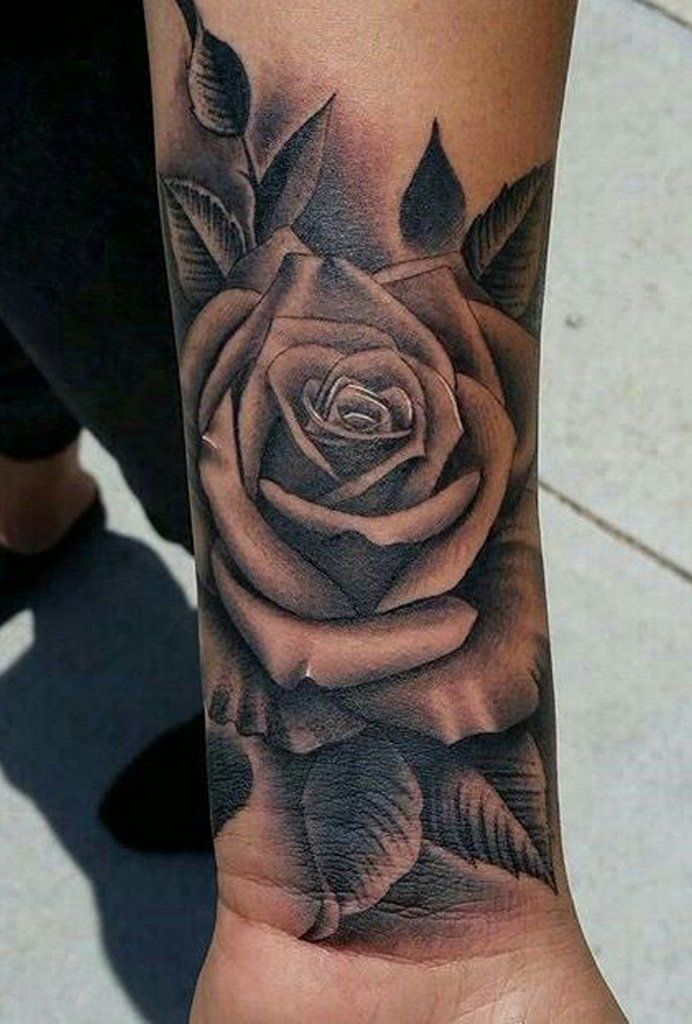
This tattoo features a classic rose rendered in detailed black and gray realism. The petals are carefully shaded to create depth, with darker tones in the folds and lighter highlights on the outer edges. The leaves surrounding the flower provide contrast and help frame the main bloom.
Rose tattoos remain one of the most popular designs in body art because of their strong symbolism. They can represent love, beauty, strength, or remembrance depending on the wearer’s personal meaning. In this piece, the rich shading and precise detailing give the flower a dramatic and timeless look.
Flowing Betta Fish Tattoo Design
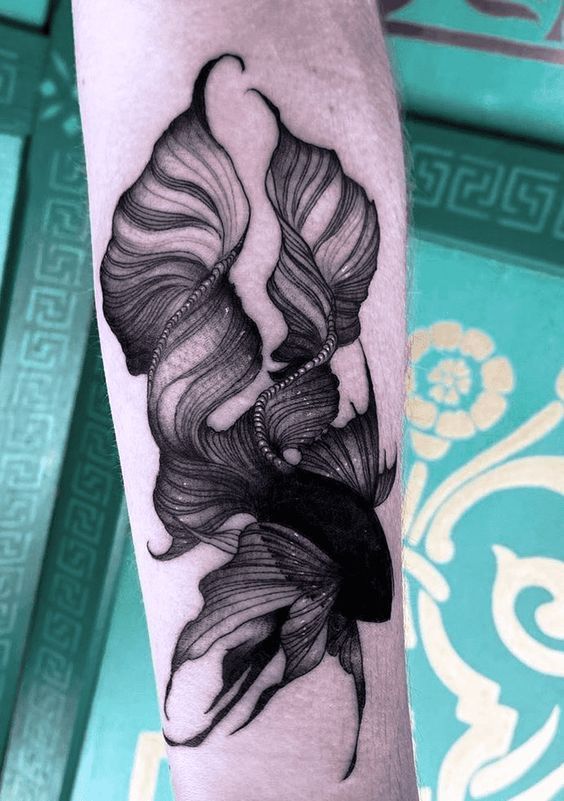
This stunning tattoo features a beautifully stylized betta fish, known for its dramatic fins and elegant movement. The artist captured the flowing nature of the fish perfectly, using delicate line work and soft shading to mimic the gentle ripple of fins underwater. Each fin is filled with layered textures and fine lines that create a sense of depth and motion, making the fish appear almost alive on the skin.
The composition works especially well on the forearm, as the elongated body and sweeping fins naturally follow the shape of the arm. Betta fish tattoos are often chosen for their symbolism of resilience, beauty, and individuality. In this design, the balance between bold black shading and delicate linework creates a striking piece that feels both artistic and fluid.
Elegant Blackwork Botanical Flower Tattoo
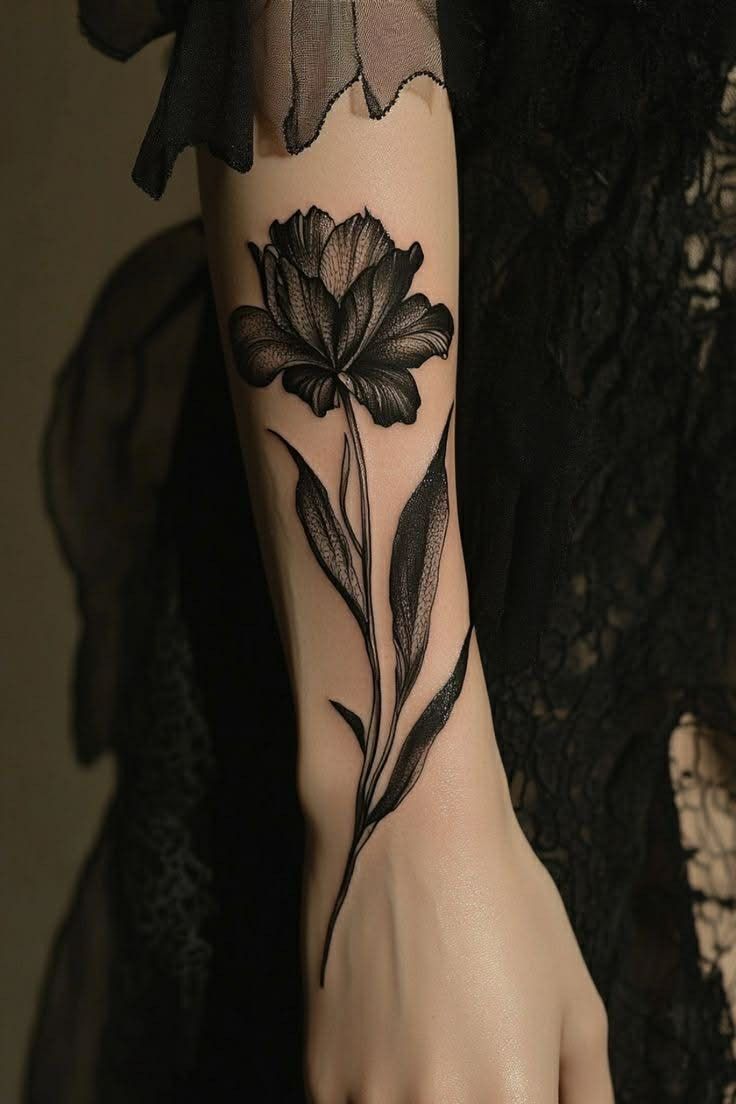
This refined floral tattoo showcases a single bloom rendered in elegant blackwork style. The flower sits gracefully along the forearm, with long, slender stems and leaves extending downward. The petals are filled with intricate line textures that add subtle depth and dimension while maintaining a soft and sophisticated aesthetic.
The shading is carefully applied, allowing the petals to appear layered and natural without overwhelming the overall composition. The minimalist layout gives the tattoo a timeless look, making it ideal for those who appreciate botanical tattoos that feel delicate yet visually impactful. Designs like this highlight the beauty of nature through precise linework and balanced negative space.
Tattoo shading is where technique meets artistry. From soft floral gradients and elegant butterfly wings to powerful portraits and dramatic realism, shading determines how dynamic a tattoo ultimately appears.
For aspiring tattoo artists, improvement comes through steady practice, experimenting with different needles, and studying professional shading techniques. Working with practice stencils, exploring ideas backgrounds, and testing different tonal approaches all help build the confidence required to create complex tattoos.
If you’re fascinated by tattoo shading or planning your next tattoo, studying these styles can be incredibly inspiring. Every tattoo tells a story—and often, it’s the shading that makes that story unforgettable.
Feel free to share your favorite tattoo shading style or design idea in the comments. Conversations like this often inspire the next great piece of ink.